
What Is a Lavender Marriage?
A lavender marriage is a legally or socially recognized partnership entered into by two people—often a heterosexual pairing—in which one or both partners are LGBTQ+. These marriages are not built on deception or manipulation; they are often formed to manage intense cultural, family, or societal pressures. Lavender marriages historically allowed LGBTQ+ individuals to survive in environments where being authentic could result in violence, discrimination, exclusion, or career loss.
Today, even in a highly progressive state like New York, people still find themselves navigating these arrangements. Many individuals in Manhattan, Brooklyn, Westchester, and Long Island face expectations from families, communities, careers, or cultural backgrounds that create deep internal conflict around identity, safety, and belonging.
Lavender marriages are not a sign of failure. They reflect the complex realities that many LGBTQ+ individuals continue to navigate.

Why Lavender Marriages Still Occur Today
Even with increased visibility and acceptance, lavender marriages remain present because the circumstances surrounding identity are layered and personal. Reasons may include:
Cultural Expectations
Some individuals feel the weight of family traditions, religious beliefs, or cultural norms that view heterosexual marriage as the only acceptable path.
Fear of Rejection
The possibility of losing family support or being cut off emotionally or financially can push people toward relationships that offer perceived stability.
Professional Pressure
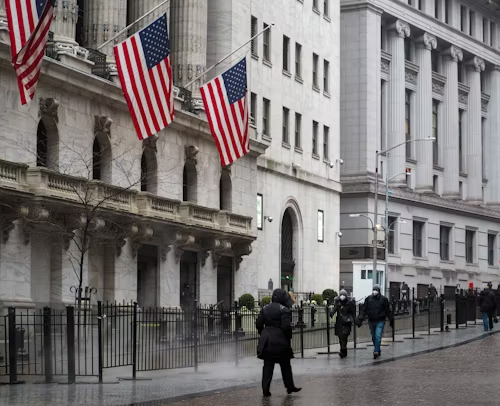
High-profile careers—especially in areas like the Financial District, Upper East Side, Chelsea, or TriBeCa—can create pressure to maintain a socially “acceptable” image.
Desire for Safety
Some individuals come from communities—locally or internationally—where openly identifying as LGBTQ+ is dangerous.
Internalized Shame or Uncertainty
Many people explore their identity later in life or struggle to accept themselves due to years of social conditioning.
These pressures are real, and they can profoundly affect emotional and psychological well-being.
Emotional and Psychological Impact of Lavender Marriages
Being in a lavender marriage can bring complex feelings. Many clients report experiencing:
Identity Conflict
Feeling torn between how you present to others and who you genuinely are.
Loneliness
Even in a committed partnership, you may feel unseen, misunderstood, or emotionally disconnected.
Anxiety
Worrying about being discovered, judged, or rejected can create constant internal tension.
Shame
Many people blame themselves, believing they “should” have acted differently or fear that they are hurting others.
Grief
You might grieve the authentic relationships you wish you could have pursued or the parts of yourself you’ve had to hide.
Pressure to Perform
Living in high-achievement, high-visibility neighborhoods such as the Upper West Side, SoHo, DUMBO, or Brooklyn Heights may intensify the need to uphold a certain image.
These emotional experiences deserve care and support, not judgment.
How Virtual Therapy Helps You Navigate Lavender Marriages (Anywhere in New York State)
Therapy provides a confidential, non-judgmental space to explore your identity, your relationship, and your emotional needs. Virtual therapy allows you to do this discreetly and comfortably from your home—whether you live in Manhattan, Brooklyn, Westchester County, or Long Island.
Private and Secure Sessions
Virtual therapy offers privacy without commuting to a physical office. This is especially important for clients who worry about being recognized or who prefer exploring sensitive identity-related concerns in a safe, low-pressure environment.
Accessible Care Across NYS
Whether you’re in the Upper East Side, Flatiron District, Greenpoint, Park Slope, Scarsdale, Larchmont, Great Neck, or Huntington, access to care is available to anyone residing in New York State.
You can receive support even if:
- you have limited time,
- you are balancing work and family obligations,
- you live in a community where privacy matters,
- or you simply feel safer talking from home.
Exploration Without Expectation
Therapy does not pressure you to leave a marriage or stay in it. It supports you in understanding:
- your emotional needs,
- your identity,
- your boundaries,
- your safety,
- your hopes for the future.
The purpose is to empower you to make choices aligned with your emotional well-being.
Support Through Relationship Decisions
Whether you choose to redefine your marriage, remain committed while building more emotional clarity, or slowly transition toward separation, therapy offers guidance through every stage.
Common Topics Clients Explore in Therapy
Clients navigating lavender marriages often ask questions such as:
- “Is it okay to question my sexuality or gender identity at this stage in my life?”
- “How do I honor myself without causing harm to my partner?”
- “Can I stay married and still explore my identity?”
- “What if I lose my family or community?”
- “How do I deal with guilt or shame?”
- “How do I stop feeling like I’m living two separate lives?”
These questions are natural. Therapy provides space to unpack them with compassion and clarity.
How Lavender Marriages Affect Couples
Partners in lavender marriages often experience their own emotional challenges, even when the arrangement began with mutual understanding. Couples therapy can support both individuals in processing:
Unmet Expectations
Understanding where hopes, disappointments, or misunderstandings have developed.
Communication Challenges
Learning how to talk openly without blame, shame, or pressure.
Emotional Disconnection
Identifying the feelings of distance and building a healthier dynamic—whether romantic, platonic, or co-parenting.
Redefining the Relationship
Some couples evolve into supportive companions; others transition into co-parents or separate amicably. Therapy helps clarify these decisions with respect and emotional safety.
Virtual couples therapy is available across New York State, making it accessible regardless of where each partner lives.
Lavender Marriages Across Different New York Communities
Identity pressure manifests differently in each region due to cultural norms, community closeness, and public visibility.
Manhattan
Neighborhoods like the Upper East Side, Upper West Side, Chelsea, TriBeCa, Flatiron, and Financial District tend to include high-achieving individuals with public or demanding careers. Expectations around image and reputation can create conditions where authenticity feels risky.
Brooklyn
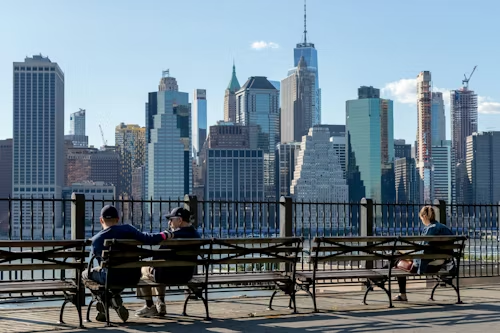
Areas such as Brooklyn Heights, DUMBO, Park Slope, Boerum Hill, Fort Greene, Williamsburg, and Greenpoint may be progressive, yet cultural or family expectations still influence clients’ choices and emotional experiences.
Westchester County
Communities like Scarsdale, Larchmont, Bronxville, Rye, Chappaqua, and Irvington often emphasize tradition, family legacy, and close-knit social circles. These environments may intensify the pressure to maintain certain appearances.
Long Island
Neighborhoods including Great Neck, Roslyn, Huntington Bay, Dix Hills, Garden City, and Sands Point can hold strong cultural traditions where heterosexual marriage is highly valued, making identity exploration emotionally sensitive.
In all these places, virtual therapy ensures privacy, accessibility, and consistent support—no matter your ZIP code.
You Deserve Emotional Safety, Clarity, and Self-Compassion
Being in a lavender marriage does not make you wrong, confused, or broken. It means you have been navigating challenging expectations and doing what you believed was necessary for survival, acceptance, or belonging.
Therapy helps you:
- understand your identity more deeply,
- reduce shame and self-judgment,
- rebuild trust in yourself,
- explore your emotional needs safely,
- make empowered decisions based on your truth,
- move toward greater authenticity at a pace that feels right for you.
You are allowed to evolve. You are allowed to question. You are allowed to heal.
Start Virtual Therapy Anywhere in New York State
If you are navigating a lavender marriage, questioning your identity, or trying to understand what you want for your future, support is available.
You can access therapy if you live in:
- Manhattan (Upper East Side, Upper West Side, Chelsea, TriBeCa, FiDi, SoHo, Gramercy, Flatiron)
- Brooklyn (Brooklyn Heights, Park Slope, DUMBO, Williamsburg, Carroll Gardens, Downtown Brooklyn)
- Westchester (Scarsdale, Larchmont, Rye, Bronxville, Harrison, Chappaqua)
- Long Island (Great Neck, Manhasset, Roslyn, Garden City, Huntington, Port Washington)
You can begin therapy confidentially from your home, without commuting or worrying about privacy.
Take the next step toward clarity and emotional freedom.
Schedule your virtual therapy session today and begin building a life that feels more honest, safe, and aligned with who you truly are.